It’s a real trip having a baby and looking at yourself in the mirror for the first time since you were pregnant. Your stomach probably hasn’t shrunk all the way yet, as your organs readjust and reposition with the newfound space. Your breasts are enlarging in preparation to feed your new baby. You may have loose skin, retained weight, and stretch marks. Varicose veins and abdominal separation may be visible. All of this can affect your self-esteem and self-perceived body image. You may wrestle with feelings of insecurity and comparison to unrealistic standards driven by “bounce back” culture, leading to anxiety and depression.
It’s part of the healing process.
It’s important to remember that these changes are part of the body’s natural healing process. Having self-compassion and approaching these feelings with kindness is vital. Being kind to yourself can help mitigate negative emotions and promote a healthier body image. Remember that your body made a whole human from scratch, carried the baby for up to 10 months, and then delivered that baby, whether vaginally or by c-section. Your body has been through it. Now is the time to be grateful your body was capable of it all. Not everyone’s is.
Often, instead of thanking our bodies for a job well done, we’re impatient with them, and with ourselves, when it comes to “bounce back” culture. I gained 80 lbs. while pregnant. 20 were gone within the first week, but the rest has remained for 8 months. I’m still feeling the effects of giving birth due to a pelvic fracture I sustained during delivery, unknowingly.
Instead of giving my body the rest it deserved, I pushed through until it gave out on me and I finally had to find out what was wrong. It took my legs literally falling out from beneath me for me to admit something was wrong, and that I had been overdoing everything. I carried a baby for 10 months. My body made another human being and pushed it into the world, yet I was still impatient to look like my old self and feel strong and healthy again. These things take time, so it’s best to keep that in mind moving forward.
Resource for your use:

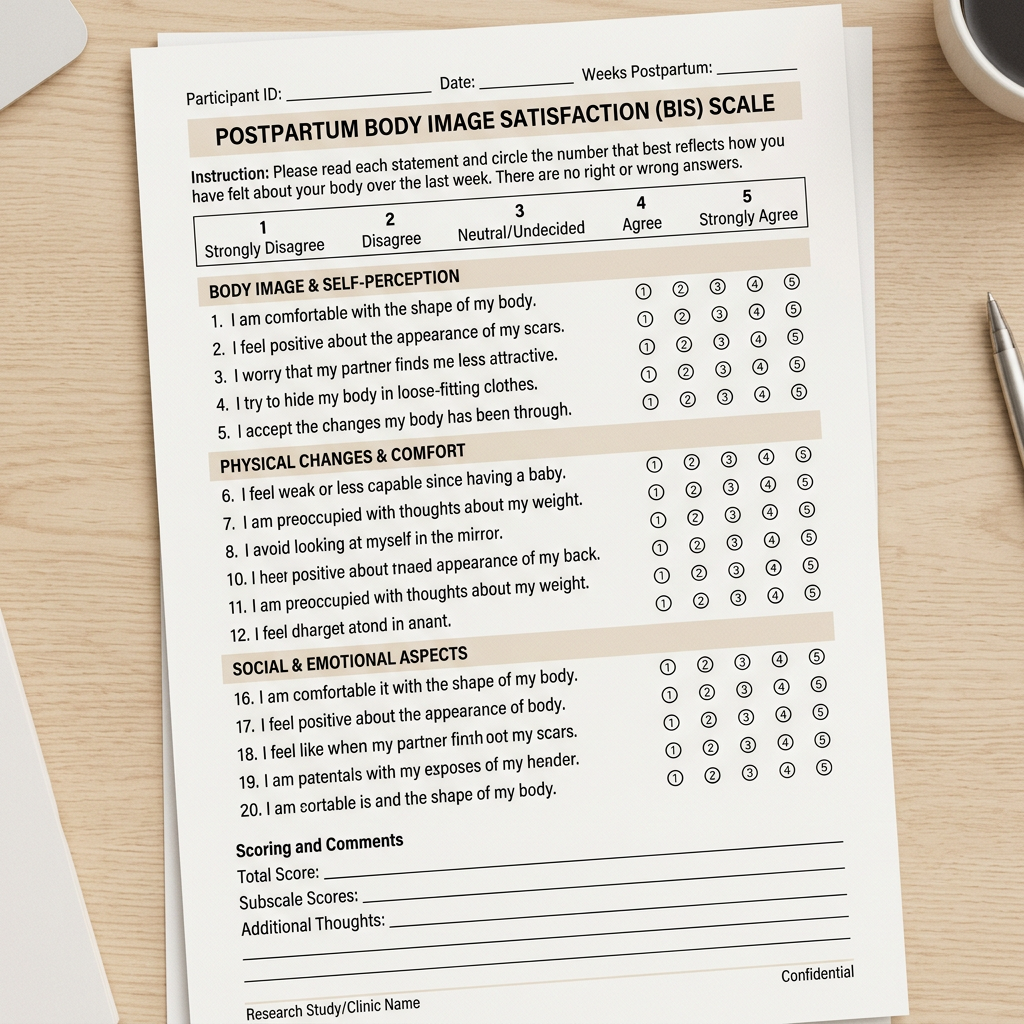
The postpartum body image scale (BIS) can refer to two different things, and both are useful postpartum. One is the silhouette/figure rating scale (no single official free version I can find or link), which measures body dissatisfaction by having you choose the figure that matches your “current body” versus your “ideal body” (the discrepancy is often calculated as ideal minus current, or the absolute difference between the two). The larger the discrepancy, the greater the dissatisfaction. This scale indicates your level of body acceptance and how well you’re coping with body change.
The other is the BIS questionnaire (links at bottom of article for free resources), which measures negative body image and body dissatisfaction through agreement-type items. A higher total score means greater dissatisfaction. It captures the psychological experience of negative body image, supports screening and risk-flagging for functional impairment, and helps evaluate whether an approach like counseling, peer support, or psychoeducation is actually reducing body image distress. These tools are useful for monitoring your progress and figuring out your starting point.
Loss of body autonomy
Less commonly discussed body image issues faced by new mothers include a loss of body autonomy, profound grief over a detached or foreign-feeling abdomen, hyper-fixation on scars or diastasis recti, and breast dysphoria tied to nursing or weaning.
If you’re struggling with diastasis recti, a pelvic floor physical therapist can help by providing targeted core rehabilitation exercises to improve abdominal function, support healing, and restore functional strength. Many mothers experience grief over a detached or foreign-feeling abdomen. Your body is different now, almost estranged from you. It’s common to look in the mirror and not recognize yourself. You are no longer with child, but you aren’t quite the person you were before pregnancy either. This can feel like a state of limbo, but it’s yours. Your body, your experience, your process, and yourself, just a new version. Think of it not as losing yourself, but as getting to know a new version of yourself. Reclaiming your body will be an ongoing process for months, or even years, but it’s an empowering progression that deserves respect and compassion.
Loss of body autonomy typically stems from feeling like you’re no longer your own person, that you’ve become a vessel for another human being’s life. Your body doesn’t feel like your own anymore, either. You produced a child, and now you’re the main source of that infant’s nutrition and growth. Your sleep is no longer your own. Your breasts don’t feel like your own.
To effectively ease anxiety and depression related to body image and autonomy, lean into coping mechanisms that work. These can include getting out of the house alone, getting enough rest with support from your village, and making sure you shower or bathe every day, do your skin care routine and take care of yourself, whether that’s working out, getting your hair cut, or getting your nails done. Find something that reminds you that you’re still you, and that you’re worth caring for. Reframe your negative thoughts and focus on what your body has achieved rather than how it looks. Your body did incredible work growing and birthing a child. Shift your focus from appearance to functionality and strength. Choose gentle movements like walking or stretching, and practice mindful eating by paying attention to your body’s hunger and fullness cues while choosing nourishing foods when possible. Treat yourself with the kindness you’d offer a friend in this season. Acknowledge your feelings without judgment rather than dismissing them. When negative thoughts arise, consciously reshape them into more positive or neutral statements. Turn something like, “my belly is still as big as it was when I was 5 months pregnant,” into, “my body is constantly changing now that the baby is here, and it’s already working toward going back to normal. It will take time.”
Your new scars and changed breasts will feel foreign to you at first, but they’re proof of strength, nurturing, and resilience. Body dysmorphia is very real in the early postpartum period, but it’s important to remember yourself and practice self-acceptance in motherhood.
Body image dissatisfaction and mental health do overlap. By consciously reframing your thoughts and words, you’re less likely to suffer from mental health issues during your postpartum period. This won’t prevent it altogether, but it will help you keep your head above water in this new chapter.
It will also help you bond more effectively with your new baby. Rather than seeing your baby as a constant reminder of the changes you’re going through, try viewing them as your greatest accomplishment, one your body made possible. Your child may be your pride and joy, but your body is responsible for the miracle of their life.
This article is for educational purposes only and is not medical advice. Every postpartum journey is different. Consult your healthcare provider or a qualified professional with questions about your individual health, recovery, or treatment.
Want to reflect on how you’re feeling about your postpartum body? Researchers have developed a free Postpartum Body Image Scale, which explores body appreciation, body concerns, and thoughts about postpartum body changes. You can view the questionnaire here: Postpartum Body Image Scale (open access).

Leave a Reply